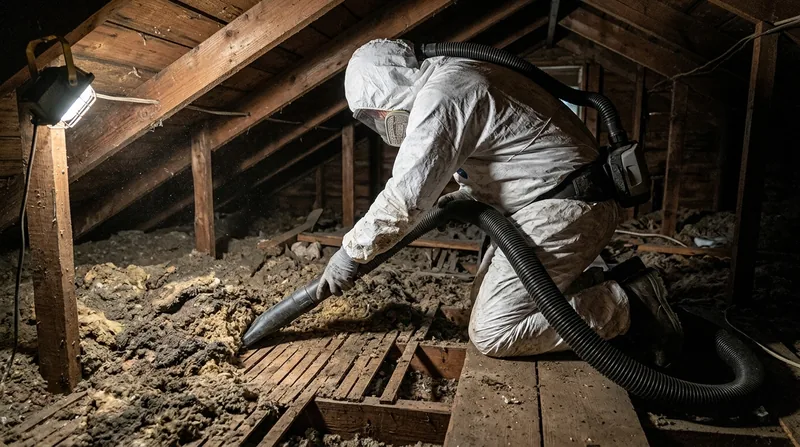




Insulation Removal in Little Rock is the essential first step before retrofitting an attic, crawl space, or wall with spray foam. Older homes in Hillcrest, the Quapaw Quarter, and mid-century ranches across North Little Rock and Pulaski County often carry decades of settled, moisture-damaged, or rodent-compromised insulation that cannot support a new foam layer. Little Rock's hot, humid climate drives moisture deep into vented attics and damp crawl spaces, and that moisture destroys fiberglass and cellulose from the inside out. We remove the old material cleanly so the substrate is ready for new closed-cell or open-cell foam, or for blown-in fiber if that is the right answer for your space. Our work clears the way for a fresh start and a properly sealed building envelope.
Why Insulation Removal Matters in Little Rock's Older Homes
Little Rock's residential stock spans from turn-of-the-century Hillcrest bungalows to 1960s ranches and newer construction toward Sherwood and Maumelle. Many of these homes were built before modern air sealing and insulation standards, and their attics and crawl spaces have been working hard for decades. In climate zone 3A, that means hot summers baking roof decks and humid conditions pulling moisture upward through the building envelope year-round. Insulation that was installed thirty, forty, or fifty years ago has settled, compressed, and absorbed moisture. Rodents and birds often nest in old fiberglass batts and blown-in cellulose, leaving contaminated material that no reputable contractor will spray foam over.
- We remove settled, compressed, or moisture-damaged insulation from attics so the deck is bare and ready for new foam or fiber.
- We clear contaminated or rodent-soiled material from crawl spaces before installing closed-cell foam or encapsulation barriers.
- We dispose of old insulation responsibly, following local waste and recycling guidelines for your city and county.
- We inspect the substrate for mold, leaks, or structural damage and report what we find before any new work begins.
The result is a clean foundation for a modern, durable insulation system that actually performs in Little Rock's heat and humidity.
Key info: Old insulation in Hillcrest and Quapaw Quarter homes often contains settled fiberglass or cellulose that has absorbed moisture from decades of summer humidity. Crawl spaces in North Little Rock and Pulaski County neighborhoods frequently hold damp, degraded insulation against subfloors. We remove it completely before new spray foam goes down, so the moisture pattern is broken and the foam adheres properly.
For more on the foundation you need before spray foam installation, see our page on attic spray foam insulation in Little Rock.
The Arkansas Building Code and the local building official at your city or county office set the rules for attic ventilation, thermal barriers, and ignition barriers. Before removing insulation from any attic, verify what your address requires. For Little Rock, check with the City of Little Rock Building Division on Markham Street, or contact your local building department if you are in Sherwood, North Little Rock, or another Pulaski County city. Permits and contractor registration rules vary from city to city, and there is no reciprocity, so always ask your building official what applies to your job.
How We Remove Insulation: Our Process in Little Rock Attics and Crawl Spaces
Insulation removal is methodical work. We use commercial-grade equipment to extract old material safely, contain dust and debris, and leave the space clean and ready for new installation. In a typical Little Rock attic, we pull out batts or blown-in cellulose, sweep the deck, inspect for leaks or damage, and prepare the surface. In crawl spaces, we remove old batts, loose fill, or degraded vapor barriers, then assess drainage and moisture conditions before any new foam is installed. The process takes care and attention; rushing it means missing contamination or leaving dust that interferes with foam adhesion.
- We inspect the attic or crawl space and photograph the existing insulation and any visible damage or moisture.
- We use HEPA-filtered vacuums and containment methods to remove old material without spreading dust through the home.
- We sweep, vacuum, and prepare the substrate so it is clean, dry, and ready for new foam or fiber.
- We dispose of removed material at licensed facilities that accept insulation and construction waste in your county.
- We document the R-value and thickness of the old material and compare it to current code requirements for your address.
Once the space is cleared, we move into insulation replacement and re-insulation with the material that fits your home, budget, and climate zone.
Local example: A 1950s ranch in North Little Rock has R-19 fiberglass batts in the attic, compressed to R-10 by settling and moisture. We remove the batts, inspect the roof deck and rim joists for leaks, clean the surface, and prepare it for closed-cell spray foam that will seal air leaks and resist the humidity that destroyed the old insulation.
Removal Methods and Approaches
| Approach | Description | Best for |
|---|---|---|
| Attic Batt and Blown-In Removal | Manual extraction of fiberglass batts and cellulose loose-fill with HEPA-filtered vacuum containment. | Hillcrest, Quapaw Quarter, and mid-century homes with settled or moisture-damaged insulation. |
| Crawl Space Insulation Removal | Removal of batts, loose fill, or degraded vapor barriers from crawl spaces with moisture assessment and substrate prep. | Damp or poorly drained crawl spaces in North Little Rock and Pulaski County neighborhoods before closed-cell foam installation. |
| Contaminated Material Removal | Careful extraction and disposal of rodent-soiled, mold-affected, or chemically compromised insulation with full containment. | Older attics and crawl spaces with evidence of pest activity or moisture damage requiring complete replacement. |
| Rim and Band Joist Insulation Removal | Removal of old batts or spray foam from rim joists and band joists to prepare for new closed-cell foam air sealing. | Basement and crawl space perimeters in homes where old foam has failed or needs upgrading to new spray foam. |
| Garage and Metal Building Insulation Removal | Extraction of old batts or deteriorated spray foam from garage ceilings and metal building walls before new installation. | Garages and metal buildings across Pulaski County where old insulation has failed due to condensation or age. |
Each approach is tailored to the space, the material, and the condition we find. We never spray foam over old, wet, or contaminated insulation, and we walk away from any job where the moisture pattern has not been fixed first.
Insulation Removal Cost in Little Rock: What to Expect
The cost of insulation removal in Little Rock depends on the size of the space, the type and condition of the material, and how difficult it is to access and dispose of. A straightforward attic removal in a smaller home typically starts at $950 and moves up based on square footage, the depth and density of the material, and whether contamination or moisture damage requires extra care. Crawl space removal costs more because of the confined working conditions and the need to assess drainage and moisture. A free written estimate from us will specify what we are removing, the area in square feet, the R-value and thickness of the existing material, and the disposal plan.
Factors that affect the price include the following.
- Square footage of the attic, crawl space, or wall cavity determines the volume of material to remove and dispose of.
- Type of insulation (fiberglass batts, blown-in cellulose, old spray foam, or mixed materials) affects extraction method and disposal cost.
- Condition of the material (settled, wet, rodent-soiled, or moldy) may require hazmat protocols or specialized containment.
- Access and working conditions (tight crawl spaces, steep roofs, cluttered attics) add labor time and safety measures.
- Disposal and recycling fees vary by county and by the weight and type of material being removed.
We recommend getting a free estimate from us and at least one other contractor so you understand the scope and the price. Our estimates are written, include R-value and thickness specs, and carry no obligation to book. Call us at (501) 588-2298 or request an estimate online, and we will respond within 24 hours.
Once removal is complete, the cost of new insulation depends on the material and the R-value your code requires. See our pricing page for ranges on spray foam installation and other insulation services.
Insulation Removal Near Me: What Little Rock Homeowners Should Know When Hiring a Contractor
Hiring the right contractor for insulation removal is as important as hiring the right one for installation. The work must be clean, safe, and thorough, and the contractor must be fully insured and able to verify coverage. You should also understand what permits apply to your address, what your local building official requires, and whether your HOA (if you have one) has rules about exterior work or attic access. A good contractor will walk you through the process, answer your questions honestly, and give you a clear written estimate before any work starts.
- Verify that the contractor is fully insured with general liability and workers compensation coverage, and ask for a certificate of insurance.
- Get at least two or three written estimates that specify square footage, R-value and thickness of existing material, and disposal method.
- Ask for references from recent jobs in Little Rock, North Little Rock, or Sherwood so you can call homeowners and ask about the work quality and cleanup.
- Check with your local building department (Little Rock, North Little Rock, Sherwood, or your city) to see if a permit is required for insulation removal or what follows it.
- If you live in a master-planned community or HOA, verify that insulation removal and re-insulation do not require architectural approval before work begins.
- Ask the contractor how they dispose of old insulation and whether recycling or waste fees are included in the estimate or billed separately.
We are fully insured, have been in business since 2009, and provide free written estimates with no obligation. Contact us today to schedule a walkthrough and get a clear picture of what your removal and re-insulation will cost.
Insulation Removal in Little Rock: Pricing Guide
| Service | Price | Details |
|---|---|---|
| Attic Insulation Removal | Starting at $950 | Includes extraction of batts or blown-in material, vacuum containment, disposal, and substrate preparation for new foam or fiber based on attic square footage |
| Crawl Space Insulation Removal | Starting at $1,200 | Includes removal of batts or vapor barriers, moisture assessment, drainage inspection, and preparation for closed-cell foam or encapsulation barriers |
| Contaminated or Rodent-Damaged Material Removal | Starting at $1,400 | Includes hazmat-grade containment, removal of soiled or mold-affected insulation, safe disposal, and full substrate cleaning before new installation |
| Rim Joist, Garage, or Metal Building Removal | Starting at $800 | Includes removal of old batts or failed spray foam from perimeter or building surfaces, preparation, and disposal based on linear feet or square footage |
| Large or Complex Multi-Zone Removal | On estimate | Attics over 1,500 sq ft, multiple contaminated zones, or jobs requiring specialized equipment or extended disposal require site visit and written quote |
| Estimate and Travel | Free | Free written estimate within 24 hours at (501) 588-2298, no travel fee in Little Rock and surrounding Pulaski County service areas |
Indicative pricing, the exact cost depends on square footage, finish, and site access. Free personalized estimate within 24h at (501) 588-2298.


