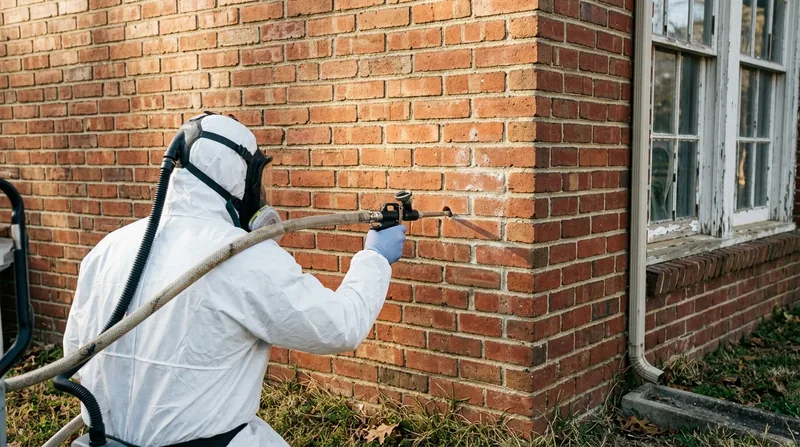




Wall & Injection Foam Insulation in Little Rock is the retrofit answer for older homes in Hillcrest, Pulaski Heights, and the Quapaw Quarter where opening walls to insulate closed stud cavities makes no practical sense. Homes built before 1980 across Greater Little Rock often have hollow walls with no insulation, and the humid Arkansas climate drives moisture and heat loss through those cavities year-round. Injection foam fills those cavities from the outside without demolition, restoring the thermal envelope and air sealing in a single afternoon. This is precision work, not a rig-and-run spray job, and it requires accuracy in hole placement, foam ratio, and pressure. We help homeowners across Little Rock, North Little Rock, Sherwood, and Maumelle seal older homes that standard blown-in insulation cannot reach. Call (501) 588-2298 for a written estimate with R-value and thickness specs, or visit our contact page to request a free evaluation.
Why Wall Injection Foam Matters in Older Little Rock Homes
Hillcrest and Pulaski Heights homes, along with mid-century ranches scattered through North Little Rock, were built with cavity walls but no insulation between the studs. In IECC climate zone 3A, hot and humid summers and sharp winter cold snaps put enormous pressure on those empty cavities. Heat radiates through uninsulated walls in summer, and cold seeps inward in winter. That hollow wall becomes a thermal superhighway, and air leaks around electrical outlets, rim joists, and band joists compound the problem. Injection foam seals and insulates at the same time, stopping the heat loss and the infiltration without tearing into drywall or siding.
- Injection foam fills closed cavities without opening walls or removing siding.
- Small diameter holes are drilled at stud spacing, foam is pumped in under controlled pressure, and holes are patched to match the original finish.
- The process takes a single day for a typical wall section and requires no interior disruption.
- Foam hardens in place and provides both insulation and air sealing in the cavity, stopping drafts at electrical outlets and rim joists.
- Older homes in Hillcrest and Pulaski Heights benefit most because their walls are hollow and accessible from the exterior.
Injection foam is the only retrofit option for these homes that does not require demolition or siding replacement.
Local example: A Hillcrest bungalow with 1920s balloon-frame walls and no cavity insulation loses heat through the exterior wall in winter and gains it in summer. Injection foam fills the cavity from outside without touching the interior plaster or the historic exterior, preserving both while restoring the thermal envelope. Homeowners report noticeably warmer rooms and lower heating bills in the first winter.
For guidance on whether your home qualifies and what permits or HOA architectural review might apply, consult your local building department. Little Rock, North Little Rock, Sherwood, and other cities in Pulaski County have different registration and permitting rules, and your local building department can tell you what applies at your address.
How Injection Foam Insulation Works: Step-by-Step in Little Rock
Injection foam is a precision process that begins with a thorough wall inspection and hole layout. We locate studs, identify any existing obstructions, and mark drilling points at standard stud spacing, typically 16 inches on center. Once holes are drilled, we inject foam under controlled pressure using specialized equipment calibrated to the manufacturer's ratio and temperature specs. The foam expands slightly and fills the cavity, then hardens in place. Holes are patched with matching caulk or siding compound, and the exterior returns to its original appearance. The entire process takes one to two days depending on wall size and access.
- We inspect the wall cavity with a borescope to confirm it is clear of obstructions, plumbing, or wiring conflicts.
- Holes are drilled at precise locations, typically 16 inches apart, to ensure full cavity coverage without overdrilling.
- Foam is injected at the correct pressure and ratio, starting at the bottom of the cavity and working upward to displace air and fill completely.
- Once cured, typically within 24 to 48 hours, holes are patched and finished to match the original siding or trim.
- The homeowner is given a re-entry window and a written record of the R-value and thickness achieved.
The result is a sealed, insulated cavity that stops heat transfer and air leakage at the wall plane.
Maumelle example: A ranch home with brick veneer and hollow cavity walls in the original 1970s section had no insulation in the exterior walls. Injection foam was pumped into the cavity from the exterior, and the brick remained undisturbed. The homeowner sealed the thermal bypass at the rim joist at the same time using rim joist spray foam, creating a complete thermal envelope upgrade without demolition.
| Approach | Description | Best for |
|---|---|---|
| Open-Cell Injection Foam | Lower-density foam that expands to fill the cavity and hardens in place. Lower cost per board foot. | Interior walls where vapor permeability is acceptable and budget is primary concern. |
| Closed-Cell Injection Foam | Higher-density, closed-cell structure with superior R-value per inch and vapor resistance. Higher cost. | Exterior walls in humid climates like Little Rock where moisture control is critical. |
| Wall Injection with Rim Joist Sealing | Injection foam in cavities combined with spray foam sealing of the rim joist and band joist where the wall meets the foundation. | Complete thermal envelope upgrade on older homes where both cavity insulation and air sealing are needed. |
| Partial-Wall Retrofit | Injection foam applied to a single wall section, such as an exterior wall in a finished room or a north-facing wall in an older home. | Targeted energy upgrades where budget or phased work makes full-home injection impractical. |
Wall & Injection Foam Insulation Cost in Little Rock: What to Expect
Wall injection foam in Little Rock typically starts at $2 per square foot of wall area and can range higher depending on cavity depth, foam type, and accessibility. A typical exterior wall section of 500 square feet might run $1,000 to $1,500 for open-cell foam, or $1,500 to $2,500 for closed-cell foam with superior R-value and vapor resistance. Closed-cell is the stronger choice in our hot and humid climate because it resists moisture intrusion from outside during summer. The cost also depends on how easily we can access the exterior, whether the wall is brick, vinyl, or wood siding, and whether holes can be patched to match the original finish.
Factors that affect the final price include the height and length of the wall, the presence of electrical outlets and trim that must be worked around, the condition of the exterior finish, and whether the cavity is clear or contains old insulation that must be removed first. If old insulation is present, we quote removal separately. We always provide a written estimate with the R-value and thickness we will achieve, so you know exactly what you are paying for. Get 2 to 3 estimates from local contractors and compare the R-value spec, not just the price. The cheapest estimate with no R-value guarantee is the riskiest. For a detailed pricing overview and to discuss your specific wall, visit our pricing page or call us at (501) 588-2298.
Wall & Injection Foam Insulation Near Me: What to Look for When Hiring a Spray Foam Contractor in Little Rock
Finding a qualified spray foam contractor near Little Rock requires more than a quick Google search. The spray foam trade has legitimate, careful installers and also has rig-and-run crews that spray fast, disappear, and leave homeowners with odor, poor coverage, or failed foam. The difference is in the details: a professional estimate includes the R-value and thickness you will receive, the foam type and manufacturer, and a clear re-entry window. A vague estimate with no specs, a price far below market, and a promise to re-enter immediately are red flags. Ask any contractor to show you written proof of insurance, and verify it with their carrier. Never accept verbal assurances that they are licensed or bonded without seeing the actual documentation.
- Request a written estimate that names the foam type, R-value per inch, and thickness you will receive in each cavity.
- Ask the contractor to describe their mechanical ventilation setup during cure and the re-entry window they guarantee.
- Verify that the contractor is fully insured and ask to see the insurance certificate listing your address as an additional insured.
- Get 2 to 3 estimates and compare the specs, not just the price. The lowest bid with no R-value guarantee is often the costliest mistake.
- Ask for references from recent wall injection jobs in Little Rock, North Little Rock, or Sherwood, and call them to ask about odor, cure time, and finish quality.
- Confirm with your local building department whether a permit is required for wall injection in your city and neighborhood. HOA rules rarely govern insulation, but always check.
We are fully insured and provide written estimates with R-value and thickness specs. We have been in business since 2009 and serve Little Rock, North Little Rock, Sherwood, Maumelle, Bryant, Benton, and surrounding areas. Contact us today for a free, no-obligation estimate and to discuss your wall insulation needs.
Wall & Injection Foam Insulation in Little Rock: Pricing Guide
| Service | Price | Details |
|---|---|---|
| Open-Cell Wall Injection Foam | Starting at $2/sq ft | Lower-density foam, good for interior walls, budget-friendly option, price varies by cavity depth and accessibility |
| Closed-Cell Wall Injection Foam | Starting at $3/sq ft | Higher R-value per inch, superior moisture resistance for humid climates, recommended for exterior walls in Little Rock |
| Partial Wall or Single-Section Retrofit | Starting at $1,500 | Targeted injection of one wall section, such as exterior wall in finished room, includes hole drilling, foam injection, and patching |
| Wall Injection with Rim Joist Sealing | On estimate | Complete thermal envelope upgrade combining cavity injection and rim joist spray foam, requires on-site assessment for accurate quote |
| Insulation Removal and Replacement | On estimate | If old insulation is present in cavity, removal is quoted separately and depends on material type and volume |
| Free Estimate | No obligation | Written quote with R-value and thickness specs, response within 24 hours, call (501) 588-2298 |
Indicative pricing, the exact cost depends on square footage, finish, and site access. Free personalized estimate within 24h at (501) 588-2298.


