Understanding Spray Foam Insulation R-Value Per Inch
Closed Cell Spray Foam Insulation delivers approximately 6 to 7 R-value per inch, making it one of the most efficient insulation materials available. Open Cell Spray Foam Insulation, by contrast, provides about 3.5 to 3.6 R-value per inch. This difference matters significantly when determining how thick spray foam should be in your attic.
The distinction between these two types affects both performance and cost. Closed cell foam's superior R-value means you need less material to achieve your target insulation level, which can translate to lower material costs despite higher per-unit pricing. Open cell foam requires greater thickness to match the same thermal resistance, but it's more affordable upfront and offers better sound dampening properties. Understanding this relationship between spray foam insulation R-value per inch and thickness helps homeowners in Little Rock make informed decisions about which product truly serves their needs.
R-Value Requirements by State: What Arkansas Demands
Arkansas building codes specify minimum insulation requirements based on climate zones. Little Rock falls into a zone requiring R-30 to R-38 for attic insulation, depending on whether you're building new or retrofitting existing structures. These R-value requirements by state aren't suggestions; they're baseline standards that help homeowners maintain energy efficiency and protect against the region's hot, humid summers and mild winters.
Many homeowners assume that exceeding these minimums always makes sense, but that's not necessarily true. If your attic already has older fiberglass batts totaling R-19, you might only need an additional R-11 to R-19 of new insulation rather than a complete replacement with full spray foam coverage. This is where air sealing becomes the smarter first step. Sealing air leaks around ductwork, electrical penetrations, and rim joists can improve your home's thermal envelope more cost-effectively than adding insulation alone. The key is assessing what you currently have and what gaps exist before committing to a full Attic Spray Foam Insulation project.
How Thick Should Spray Foam Be: Right-Sizing Your Attic
Determining how thick spray foam should be depends on multiple factors: your current insulation, local R-value requirements, budget, and long-term goals. If you're starting from scratch or replacing degraded insulation, 5.5 inches of closed cell foam (roughly R-33 to R-39) typically satisfies Arkansas codes. If you're adding to existing insulation, you might need only 2 to 3 inches of spray foam applied over the old material to reach your target R-value.
Over-insulating isn't inherently wasteful, but it can be inefficient if you haven't addressed air leaks first. A home with significant gaps around the attic hatch, poorly sealed ductwork, and penetrations around plumbing vents will lose conditioned air regardless of insulation thickness. This is why many energy auditors recommend a two-phase approach: first, perform comprehensive air sealing, then add insulation to the appropriate depth. For homeowners in North Little Rock and surrounding areas, this staged approach often delivers better energy savings per dollar spent than jumping directly to a full spray foam retrofit.
Air Sealing vs. Full Spray Foam: When Less Is More
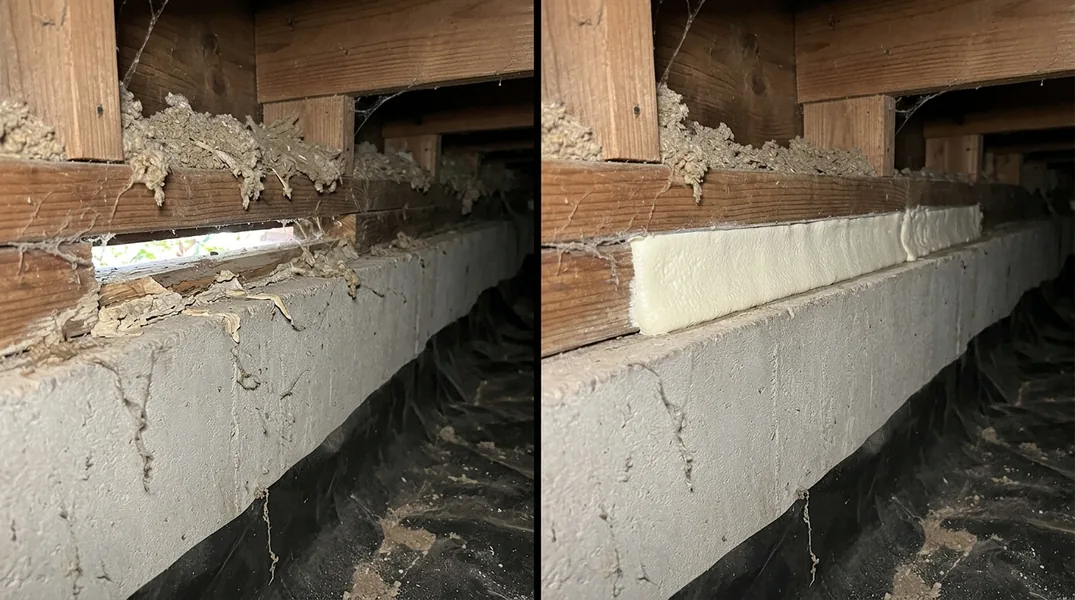
The debate between air sealing alone and full spray foam insulation hinges on your home's current condition and energy performance. Air sealing addresses the single biggest source of energy loss in most homes: uncontrolled air movement. Gaps and cracks account for roughly 25 to 30 percent of heating and cooling energy loss. When you seal these leaks with caulk, weatherstripping, or foam sealant, you're directly attacking the problem. Full spray foam, by contrast, combines air sealing and insulation into one material, but it comes at a premium cost.
For homes with adequate existing insulation but poor air tightness, strategic air sealing delivers exceptional return on investment. Sealing around recessed light fixtures, attic access points, and HVAC penetrations can cost a fraction of full foam installation while improving comfort immediately. However, if your home has minimal insulation, exposed rim joists, or a poorly insulated attic, Attic Spray Foam Insulation provides superior long-term performance. The spray foam adheres to all surfaces, eliminates thermal bridging, and lasts the life of the home. The decision ultimately depends on your specific situation, which is why a professional energy audit matters before committing to either approach.
Rebates: Maximizing Your Savings
The federal insulation tax credit ended on December 31, 2025, so ask your utility company about any current rebates instead. Arkansas also offers utility rebates through its energy efficiency programs, though availability and amounts vary by provider. Checking with your local utility company can reveal additional savings opportunities that stack on top of federal credits.
Many homeowners overlook these incentives because they assume all insulation work qualifies equally. In reality, the work must meet specific energy code standards and be installed by qualified contractors. When you contact Little Rock Spray Foam Insulation at (501) 588-2298 for a free estimate, our team can help you understand which rebates apply to your project. This guidance alone can save thousands of dollars, making the difference between an affordable upgrade and one that strains your budget.
Attic Spray Foam Insulation Cost in Little Rock: What to Budget
The pricing for spray foam insulation varies based on material type, thickness, and attic size. Closed cell foam typically ranges from $1.50 to $2.50 per board foot, while open cell runs $0.50 to $1.00 per board foot. For a typical 1,500-square-foot attic requiring 5.5 inches of closed cell foam, homeowners should budget between $4,500 and $7,500 before incentives. Open cell alternatives for the same space might cost $2,000 to $3,500, offering substantial savings if you prioritize cost over maximum R-value density.
Air sealing alone costs significantly less, typically ranging from $800 to $2,000 depending on how many penetrations need sealing. This lower entry point makes it an attractive first step for budget-conscious homeowners. However, when you factor in the rebates and available rebates, the net cost of a full spray foam project often becomes more competitive than it initially appears. Adding state or utility rebates can reduce it further. For a personalized cost estimate tailored to your home and local incentives, reach out to Little Rock Spray Foam Insulation today for a free estimate.
Looking for a professional spray foam insulation contractor in Little Rock? Little Rock Spray Foam Insulation responds fast for all your spray foam insulation needs.
Get a Free Quote