Is Spray Foam Insulation Worth It for Historic Little Rock Neighborhoods?
Homeowners in the historic neighborhoods of Hillcrest and Pulaski Heights face a unique challenge when it comes to insulation. Many of these beautiful older homes were built decades ago with minimal or deteriorated insulation, leaving residents struggling with inconsistent temperatures, high energy bills, and moisture problems. The question of whether is spray foam insulation worth it becomes especially relevant when you're dealing with crawl spaces, odd wall configurations, and architectural constraints that traditional fiberglass batts simply cannot address effectively.
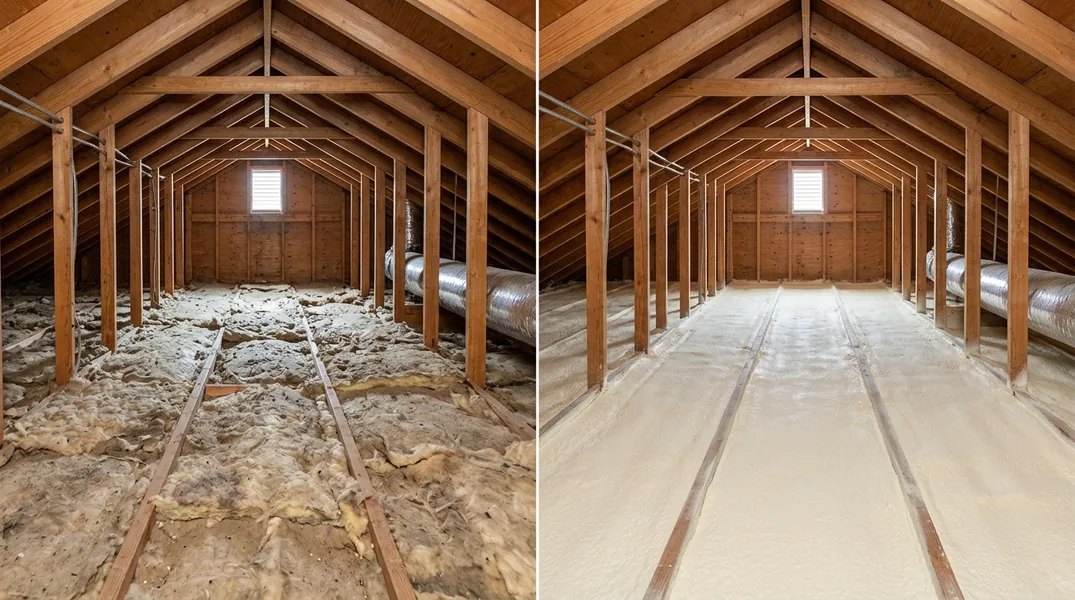
Attic Spray Foam Insulation has become increasingly popular in Little Rock because it adapts to the unique geometry of older homes. Unlike rigid insulation products, spray foam expands to fill every cavity, crack, and void, creating an air-tight seal that prevents thermal loss and moisture infiltration. For homeowners weighing the investment, the value proposition centers on long-term energy savings, improved comfort, and protection against the humid Arkansas climate that can wreak havoc on poorly insulated structures.
Understanding Spray Foam Off-Gassing and Safety Concerns
One of the most common questions homeowners ask is is spray foam insulation safe, and the concern often revolves around off-gassing. When spray foam is first applied, it does release volatile organic compounds (VOCs) into the air during the curing process. This off-gassing period typically lasts from a few hours to several days, depending on the type of foam used and environmental conditions. The smell can be noticeable and concerning to families, especially those with children or pets. However, it's important to distinguish between temporary odor and actual health risk.
Professional installation is crucial for minimizing exposure to spray foam off-gassing. When Closed Cell Spray Foam Insulation is applied by experienced technicians, proper ventilation protocols are followed, and occupants are typically advised to leave the home for 24 to 48 hours while the foam cures. Once fully cured, spray foam is chemically stable and does not continue to off-gas. The EPA has established safety guidelines for spray polyurethane foam application, and reputable contractors in Little Rock follow these standards rigorously. If you're considering this insulation method for your Hillcrest or Pulaski Heights home, choosing an experienced, licensed contractor significantly reduces any safety concerns.
Spray Foam Insulation Problems: What Homeowners Should Know
While spray foam insulation offers many advantages, understanding potential spray foam insulation problems helps you make an informed decision. One common issue is improper installation, which can lead to uneven coverage, inadequate density, or application errors that compromise the insulation's effectiveness. If foam is applied too thickly in some areas and too thinly in others, you won't achieve the R-value you're paying for. Additionally, some homeowners experience difficulties with moisture management if the wrong type of foam is selected for their specific application, particularly in crawl spaces where humidity is a persistent challenge.
Another consideration is that spray foam can be difficult to remove or modify if you need to access wall cavities for plumbing, electrical work, or future renovations. Unlike traditional insulation, you cannot simply pull out foam and reinstall it. Some homeowners also report that poorly installed foam can trap moisture against wood framing, potentially leading to mold growth or wood rot in older homes. The key to avoiding these problems is working with a qualified contractor who conducts a thorough pre-installation assessment, uses the appropriate foam type for your climate and application, and ensures proper installation techniques. When these factors are managed correctly, the problems that give spray foam a bad reputation become largely avoidable.
Spray Foam Insulation Pros and Cons: A Balanced Look
Understanding the complete picture of spray foam insulation pros and cons is essential for homeowners in older Little Rock neighborhoods. On the positive side, spray foam offers superior air sealing compared to any other insulation method, achieving R-values between 3.5 and 6.5 per inch depending on whether you choose open or closed cell varieties. This air sealing capability is particularly valuable in crawl spaces and attics where air leaks account for significant energy loss. The foam also provides excellent moisture barriers, especially Closed Cell Spray Foam Insulation, making it ideal for humid climates. Homeowners typically see energy bill reductions of 15 to 30 percent after installation, and the improved comfort throughout the home is immediately noticeable.
The drawbacks include higher upfront costs compared to fiberglass or cellulose, the off-gassing period that requires temporary relocation, and the need for specialized equipment and training to install properly. Open Cell Spray Foam Insulation is less expensive but offers lower R-value and provides less moisture protection, making it better suited for interior walls than crawl spaces. Some homeowners also express concerns about the environmental impact of petroleum-based foam products, though water-blown and soy-based alternatives are becoming more available. The longevity is excellent, with most spray foam lasting 80 years or more without degradation, which amortizes the initial investment over decades. For historic homes in Hillcrest and Pulaski Heights where energy efficiency and moisture control are paramount, the pros often outweigh the cons.
Crawl Space and Attic Applications: Why Spray Foam Excels
Crawl spaces and attics are where spray foam insulation truly demonstrates its value for homeowners in Little Rock's older neighborhoods. Traditional insulation in these spaces often settles, compresses, or becomes damp, losing effectiveness over time. Spray foam, by contrast, maintains its integrity indefinitely. In crawl spaces, closed-cell foam creates a vapor barrier that prevents moisture from rising through the foundation and into the living spaces above, a critical advantage in Arkansas's humid climate. The foam also creates a thermal break that prevents heat loss through the floor, making basements and first floors significantly more comfortable during winter months.
Attic applications benefit equally from spray foam's superior performance. Rather than relying on traditional batts or blown-in insulation that leaves gaps around rafters, joists, and penetrations, spray foam conforms perfectly to the attic's contours. This eliminates thermal bridging and air leaks that compromise the effectiveness of conventional insulation. For homes in Hillcrest and Pulaski Heights with complex roof lines, cathedral ceilings, or existing moisture issues, Attic Spray Foam Insulation often represents the most effective long-term solution. If you're experiencing high heating and cooling costs, condensation in your attic, or ice dams in winter, spray foam warrants serious consideration.
Spray Foam Insulation Cost in Little Rock: What to Budget
When evaluating whether spray foam insulation is worth the investment, understanding the cost structure is essential. Pricing for spray foam typically ranges from $1.50 to $3.50 per board foot for closed-cell foam and $0.44 to $0.65 per board foot for open-cell foam. For a typical 1,500 square foot attic, you might expect to invest between $3,000 and $8,000 depending on the foam type, depth of application, and local labor rates. Crawl space encapsulation with spray foam generally costs between $4,000 and $12,000 for a standard-sized space. While these figures are higher than traditional insulation options, the energy savings and longevity of spray foam make it cost-effective over time, particularly for older homes that lose significant amounts of conditioned air.
Many homeowners find that the investment pays for itself within 5 to 10 years through reduced energy bills, and the insulation continues to deliver savings for decades beyond that. Additionally, improved comfort, reduced HVAC strain, and protection against moisture damage add value that extends beyond simple energy cost calculations. If you're interested in understanding how spray foam might fit your specific budget and home situation, Little Rock Spray Foam Insulation offers a free estimate that accounts for your home's unique characteristics. You can reach the team at (501) 588-2298 to discuss your project and receive detailed pricing information tailored to your needs.
Looking for a professional spray foam insulation contractor in Little Rock? Little Rock Spray Foam Insulation responds fast for all your spray foam insulation needs.
Get a Free Quote