The Mid-Century Ranch Challenge in North Little Rock
Mid-century ranch homes have a timeless appeal that draws many homeowners to North Little Rock neighborhoods. Built between the 1940s and 1970s, these charming properties feature clean lines, open floor plans, and affordable square footage that made them popular with growing families. However, what made them economical to build back then often means they're energy inefficient today. The insulation standards of that era fall dramatically short of modern building codes and energy conservation practices.
One of the most common problems we encounter in mid-century ranches is inadequate or deteriorating attic insulation. Many of these homes were built with minimal insulation, often just a thin layer of fiberglass batts or even loose-fill materials that have settled and compacted over decades. Even worse, the construction methods used in the 1950s and 1960s frequently left gaps, voids, and irregular spaces that traditional insulation materials simply cannot fill effectively. These hidden gaps are where energy loss happens, driving up utility bills and making homes uncomfortable year-round.
Spray Foam vs Blown In Insulation: Why Gaps Matter
When comparing spray foam vs blown in insulation, the fundamental difference comes down to how each material fills space. Blown-in insulation, whether cellulose or fiberglass, relies on gravity and loose particles to settle into cavities. This approach works reasonably well in open, rectangular spaces like standard wall cavities. However, in the complex geometry of an attic in a mid-century ranch, blown-in materials often fail to reach corners, bridge gaps around structural elements, and seal penetrations where pipes and wiring pass through.
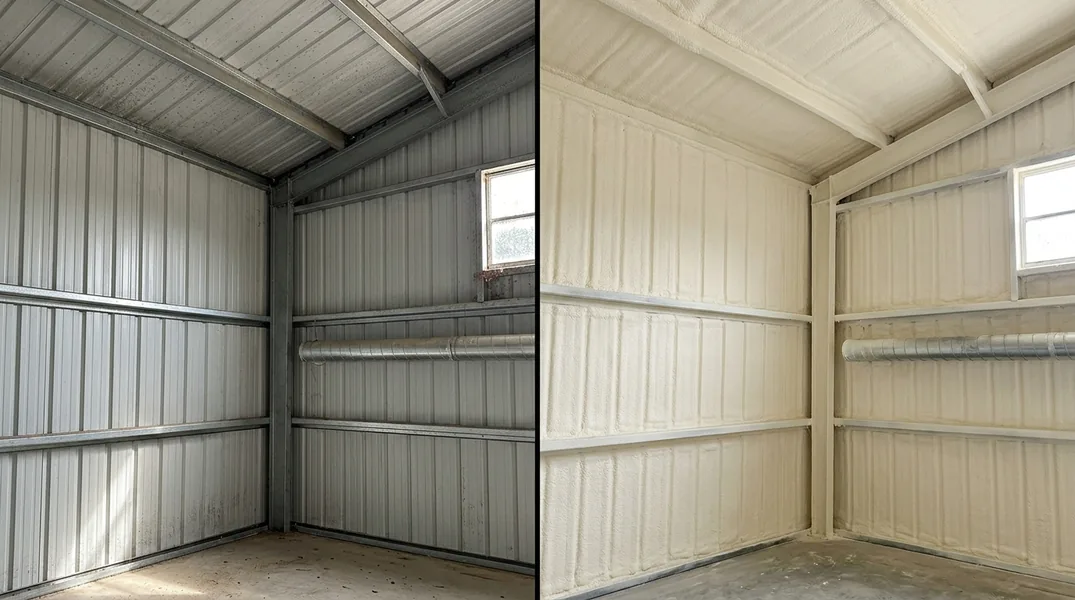
Attic Spray Foam Insulation expands as it cures, conforming to every surface it touches. This expansion is the key advantage. Spray foam fills irregular spaces, seals air leaks, and creates a continuous thermal barrier that blown-in insulation simply cannot match. In older ranch homes where attic framing is often uneven and construction quality varies, this adaptability makes spray foam the superior choice for closing the gaps that energy audits consistently identify as problem areas.
Spray Foam vs Fiberglass: The Durability Factor
Fiberglass batts have been the standard attic insulation for decades, and they do provide some thermal resistance when installed correctly. However, fiberglass has significant limitations, especially in older homes. The material compresses over time, losing effectiveness. Moisture can penetrate fiberglass batts, reducing their insulating value and creating conditions for mold growth. In attics where roof leaks have occurred (common in aging mid-century ranches), fiberglass becomes soggy and useless. Fiberglass also provides no air sealing benefit, meaning conditioned air continues to escape through gaps and cracks even when the insulation itself is present.
When evaluating spray foam vs fiberglass, consider longevity and performance. Spray foam maintains its R-value over time and resists moisture absorption. Closed Cell Spray Foam Insulation is particularly effective in attics because it provides both insulation and a vapor barrier, protecting your home from moisture intrusion. Unlike fiberglass, spray foam doesn't settle, compress, or degrade. Once applied, it continues performing at its rated R-value for the life of your home. For mid-century ranches that may have experienced decades of moisture exposure, this durability advantage translates directly to better energy efficiency and lower repair costs down the road.
Best Insulation for Attic: Why Spray Foam Wins for Older Homes
Determining the best insulation for attic spaces requires understanding your specific home's challenges. In Little Rock, our climate demands insulation that handles both summer heat and winter cold, plus the occasional moisture issues that come with our humid subtropical weather. Mid-century ranches, built before modern air sealing standards, are particularly vulnerable to air leakage around attic penetrations, ridge vents, and soffit areas.
Spray foam addresses all these concerns simultaneously. It seals air leaks while providing insulation, creating an attic environment that stays conditioned year-round. The material bonds to wood framing, preventing the settling problems that plague loose-fill alternatives. For homeowners serious about reducing energy costs and improving comfort in older homes, spray foam represents the most comprehensive solution available. It's especially valuable in attics with complex layouts, multiple roof angles, and existing structural issues common in ranch-style homes.
Spray Foam vs Cellulose: Performance in Humid Climates
Cellulose insulation, made from recycled paper, offers decent R-value and appeals to environmentally conscious homeowners. However, spray foam vs cellulose comparisons reveal critical vulnerabilities in humid climates like ours. Cellulose is hygroscopic, meaning it readily absorbs moisture from the air. In North Little Rock summers, when humidity levels soar, cellulose can absorb significant moisture, reducing its insulating effectiveness and creating conditions for mold and mildew. The material also requires chemical treatments for fire resistance, which can off-gas over time.
Closed cell spray foam, by contrast, is hydrophobic and resists moisture absorption naturally. It doesn't require chemical fire retardants because the foam itself is inherently fire-resistant. For homeowners in older mid-century ranches where moisture control is already challenging due to aged roofing and poor ventilation, spray foam provides peace of mind that cellulose simply cannot offer. The slight additional cost of spray foam is offset by superior durability, lower maintenance, and better long-term performance in our regional climate.
Getting Your North Little Rock Ranch Properly Insulated
If you own a mid-century ranch in the North Little Rock area and suspect your attic insulation is inadequate, the first step is a professional assessment. Many homeowners are surprised to learn that their attics have significant gaps, compressed insulation, or missing coverage entirely. An energy audit can pinpoint problem areas and quantify potential savings from upgrading to spray foam.
Little Rock Spray Foam Insulation specializes in retrofitting older homes with modern insulation solutions tailored to their unique challenges. We understand the construction methods and common problem areas found in mid-century ranches, and we know how to apply spray foam effectively in tight, irregular spaces. Whether you're dealing with an attic that never had adequate insulation or one where decades of settling have reduced effectiveness, spray foam offers a lasting solution. Contact us at (501) 588-2298 or request a free estimate to learn how much you could save on energy bills and improve your home's comfort. We serve the entire Little Rock area and would be happy to evaluate your specific situation.
Looking for a professional spray foam insulation contractor in Little Rock? Little Rock Spray Foam Insulation responds fast for all your spray foam insulation needs.
Get a Free Quote