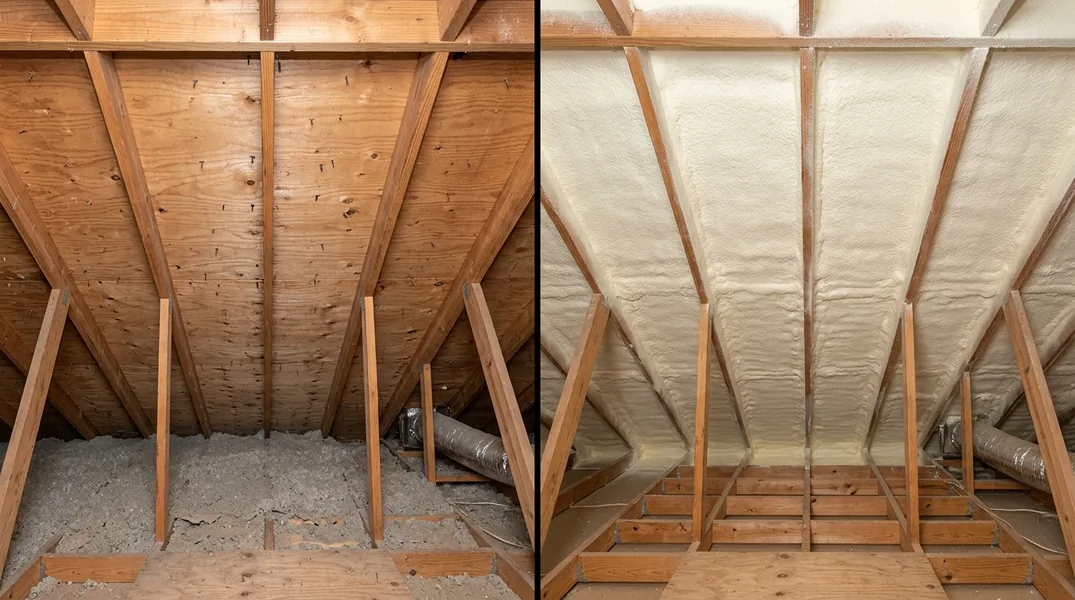
Understanding Spray Foam Insulation Types
Attic spray foam insulation has become a popular choice for homeowners across Little Rock looking to improve energy efficiency and comfort. However, not all spray foam is created equal. The two primary types, open cell and closed cell, have distinct characteristics that make them suitable for different applications and budgets. Understanding these differences is essential before deciding which option works best for your home.
Spray foam insulation works by expanding into cracks and crevices, creating an air-tight seal that traditional insulation materials cannot achieve. This superior air sealing capability makes spray foam particularly effective in attics, where air leaks can account for significant energy losses. The choice between open cell and closed cell formulations depends on your specific needs, climate considerations, and financial investment capacity.
What Is Open Cell Spray Foam Insulation?
Open Cell Spray Foam Insulation is a lighter, more flexible material that expands significantly during application. The cells within the foam remain open, allowing air and moisture to pass through, which gives this type its characteristic spongy texture. Open cell foam typically has an R-value of approximately 3.5 to 3.8 per inch, making it a moderate insulator that still provides excellent air sealing properties.
The primary advantage of open cell foam is its cost effectiveness. It generally costs less per board foot than closed cell alternatives, making it an attractive option for homeowners working within tighter budgets. Additionally, open cell foam is easier to cut and install around irregular attic spaces, pipes, and wiring. Since it's more permeable to moisture, it's often paired with a vapor barrier in climates where humidity control is important. For Little Rock homeowners seeking a balance between performance and affordability, open cell foam can be an excellent solution, particularly in finished attics or spaces where sound dampening is also desired.
What Is Closed Cell Spray Foam Insulation?
Closed Cell Spray Foam Insulation is a denser, more rigid material where the cells are completely closed off from one another. This creates a plastic-like barrier that prevents both air and moisture from passing through. Closed cell foam delivers a superior R-value of approximately 6.0 to 6.5 per inch, nearly double that of open cell alternatives. This higher insulating value means you need less material to achieve the same thermal resistance.
The dense nature of closed cell foam provides additional structural benefits to your attic. It can contribute to the rigidity of roof decking and provides better protection against moisture infiltration, making it ideal for areas prone to humidity or potential water exposure. While closed cell foam carries a higher upfront cost, the superior insulation value and moisture resistance often justify the investment for homeowners seeking maximum performance and long-term durability. It's particularly beneficial for North Little Rock and surrounding areas where seasonal humidity fluctuations can impact attic conditions.
Climate Considerations for Little Rock Homes
Little Rock's subtropical humid climate plays a significant role in determining which spray foam type makes the most sense for your attic. The region experiences hot, humid summers with temperatures frequently exceeding 90 degrees Fahrenheit, along with mild winters and considerable moisture in the air throughout the year. These climate characteristics directly influence how insulation performs and how moisture is managed within your attic space.
For homes in Little Rock's climate zone, closed cell foam offers superior performance due to its inherent moisture resistance. The dense cell structure prevents humid outside air from penetrating the foam, reducing the risk of condensation and mold growth within your attic cavity. Open cell foam, while still effective, requires more careful attention to vapor barrier installation to prevent moisture-related issues. If you're considering a sealed attic insulation solution that truly protects against the region's humidity challenges, closed cell foam often emerges as the more reliable long-term choice. However, your specific attic conditions, ventilation needs, and whether you're creating an unvented attic spray foam system also factor into this decision.
Attic Spray Foam Insulation Cost in Little Rock: What to Budget
The financial investment for spray foam insulation varies considerably based on the type you choose, your attic size, and application complexity. Open cell foam typically costs between 0.50 to 0.75 dollars per board foot, while closed cell foam ranges from 1.00 to 1.50 dollars per board foot. For an average 1,500 square foot attic with six inches of open cell foam, you might expect costs in the 2,500 to 4,000 dollar range, whereas the same space with closed cell foam could reach 5,000 to 8,000 dollars or more.
While these numbers might seem substantial, remember that spray foam insulation delivers significant long-term energy savings. Many Little Rock homeowners recoup their investment through reduced heating and cooling costs within 5 to 8 years. Additionally, improved comfort, better air quality, and protection against moisture damage add value beyond simple energy calculations. To understand the specific pricing for your home, contact Little Rock Spray Foam Insulation at (501) 588-2298 for a detailed assessment. Every attic is unique, and professional evaluation ensures you receive an accurate quote tailored to your specific situation and insulation goals.
Making Your Decision: Which Foam Type Is Right for You?
Choosing between open cell and closed cell spray foam ultimately depends on balancing three key factors: your budget, your attic's specific conditions, and your long-term performance expectations. If cost is your primary concern and you're comfortable with the moisture management requirements, open cell foam provides solid insulation performance at a more accessible price point. However, if you're seeking maximum R-value, superior moisture protection, and the best possible long-term durability for your Little Rock home, closed cell foam justifies its higher investment.
The best way to make this decision is to consult with experienced professionals who understand local climate conditions and building science. Little Rock Spray Foam Insulation specializes in helping homeowners evaluate both options based on their unique circumstances. Whether you're interested in open cell, closed cell, or exploring whether Wall & Injection Foam Insulation might benefit other areas of your home, our team can provide expert guidance. Contact us today at (501) 588-2298 or request a free estimate to discuss your attic insulation needs. We'll help you understand the advantages and limitations of each approach so you can make a confident, informed decision that protects your home and maximizes your comfort for years to come.
Looking for a professional spray foam insulation contractor in Little Rock? Little Rock Spray Foam Insulation responds fast for all your spray foam insulation needs.
Get a Free Quote