Understanding Zone 3A Climate and Its Impact on Little Rock Homes
When most homeowners think about insulation, they focus on R-value and temperature control. But if you live in Little Rock, there's another critical factor that determines whether your attic and crawl space will remain healthy and energy-efficient: humidity.
Little Rock sits in USDA Hardiness Zone 3A, which means the region experiences significant seasonal temperature swings and, more importantly, consistently elevated humidity levels throughout much of the year. This climate creates a perfect storm for moisture problems in attics and crawl spaces. The warm, humid summers combined with temperature fluctuations in spring and fall create conditions where traditional fiberglass and cellulose insulation can absorb moisture, lose their insulating properties, and become breeding grounds for mold and mildew. Understanding this local climate reality is the first step toward protecting your home's structural integrity and indoor air quality.
Why Traditional Insulation Falls Short in Humid Climates
Fiberglass batts and blown-in cellulose insulation have been the standard for decades, but they share a critical weakness in humid environments: they absorb moisture. When moisture penetrates these materials, several problems develop simultaneously. The insulation's R-value drops as water displaces the air pockets that provide thermal resistance. Wet insulation becomes compacted and settles, leaving gaps that allow conditioned air to escape. Over time, the moisture creates ideal conditions for mold growth, which can spread to wooden framing members and create health concerns for your family.
In Little Rock's climate, these issues aren't theoretical concerns. Many homeowners discover mold in their attics or experience unexplained increases in energy bills because their traditional insulation has absorbed moisture and become ineffective. The problem is particularly acute in crawl spaces, where moisture naturally accumulates and traditional insulation offers virtually no vapor barrier protection. This is why homeowners throughout the region are turning to spray foam solutions that address humidity at its source rather than simply hoping moisture won't penetrate the insulation.
How Closed Cell Spray Foam Insulation Solves the Humidity Problem
Closed Cell Spray Foam Insulation is fundamentally different from traditional materials because it creates a continuous, impermeable barrier that resists moisture penetration. Unlike fiberglass, which has tiny air pockets that moisture can enter, closed cell foam has sealed cells that prevent water vapor from passing through the material. This means that even in Little Rock's humid environment, the foam maintains its insulating properties year-round and never becomes a moisture problem itself.
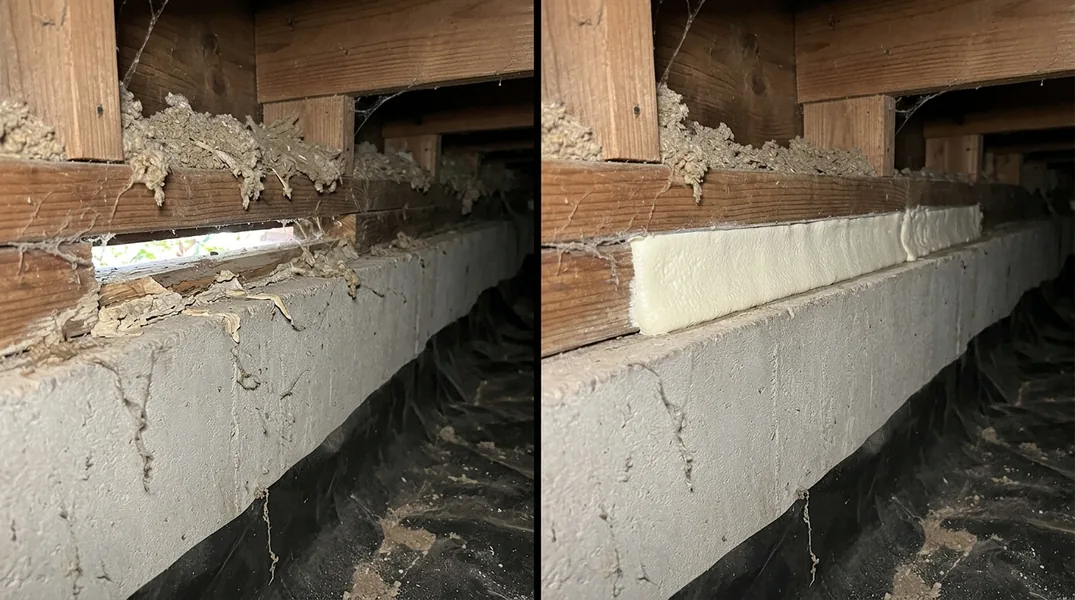
The vapor barrier properties of closed cell foam make it especially valuable for crawl spaces and pier and beam foundations, which are naturally prone to moisture accumulation. When you apply Closed Cell Spray Foam Insulation to crawl space walls and band joists, you're not just adding insulation. You're creating a complete moisture management system that prevents humid outside air from entering the crawl space and prevents ground moisture from migrating upward into your living spaces. This is why Closed Cell Spray Foam Insulation is consistently recommended as the best insulation for crawl space applications in humid climates.
Crawl Space Spray Foam and Pier and Beam Insulation Solutions
Crawl spaces and pier and beam foundations present unique challenges that standard insulation simply cannot address. These spaces sit directly above the ground and are exposed to soil moisture, outdoor humidity, and temperature extremes. Traditional crawl space insulation approaches, such as fiberglass batts between floor joists, leave multiple vulnerability points where moisture can enter and where air leaks allow conditioned air to escape. The result is cold floors in winter, high humidity levels that encourage mold growth, and energy bills that seem disproportionately high for the space being conditioned.
Crawl space spray foam application changes this dynamic entirely. By spraying closed cell foam directly onto crawl space walls, band joists, and rim joists, Little Rock Spray Foam Insulation creates an integrated system that controls both heat loss and moisture infiltration. The foam adheres directly to all surfaces, eliminating gaps and air leaks that would otherwise exist around traditional insulation materials. Many homeowners report that their cold floors problem disappears entirely after crawl space spray foam installation, because the thermal barrier now prevents heat from escaping through the foundation. Additionally, the moisture barrier created by the foam means your crawl space stays drier, which extends the life of wooden structural components and prevents the mold and mildew issues that plague traditionally insulated crawl spaces in humid climates.
Cold Floors Insulation: Why Your Pier and Beam Home Needs Spray Foam
If you own a pier and beam home in the Little Rock area, you've likely experienced the frustration of cold floors despite having your heating system running. This problem occurs because traditional insulation between floor joists doesn't adequately seal the crawl space, allowing cold outdoor air and humid ground-level air to circulate beneath your home. Even when fiberglass insulation is properly installed with a vapor barrier, gaps and thermal bridging around rim joists and band joists allow significant heat loss. In humid climates like ours, moisture also compromises the insulation's effectiveness over time.
Closed Cell Spray Foam Insulation applied to pier and beam foundations solves the cold floors problem by creating a complete thermal and moisture envelope around the crawl space. The foam is applied to the band joist, rim joist, and crawl space walls, creating continuous insulation without gaps or thermal bridges. This approach not only eliminates cold floors but also reduces the workload on your heating system, lowering your energy bills. The moisture control properties mean your crawl space stays dry, which protects your home's structural integrity and prevents the expensive damage that can result from unchecked moisture problems. Many homeowners are surprised to learn that upgrading their crawl space insulation with spray foam delivers both comfort improvements and measurable energy savings.
Getting the Right Solution for Your Little Rock Home
If you're experiencing humidity problems, mold concerns, or cold floors in your home, the solution starts with understanding your home's specific needs. Every crawl space, pier and beam foundation, and attic presents unique challenges based on the home's age, construction methods, and current condition. This is why Little Rock Spray Foam Insulation begins every project with a thorough assessment of your space, identifying moisture sources, air leaks, and insulation gaps that need to be addressed.
The best way to understand whether spray foam insulation is right for your home is to contact Little Rock Spray Foam Insulation for a free estimate. Our team will evaluate your attic, crawl space, or pier and beam foundation and recommend the most effective solution for your home's climate and construction. You can reach us at (501) 588-2298 to schedule your assessment. We serve Little Rock and the surrounding areas, and we're committed to helping homeowners understand why Zone 3A humidity makes spray foam insulation the superior choice for long-term comfort, energy efficiency, and home protection.
Looking for a professional spray foam insulation contractor in Little Rock? Little Rock Spray Foam Insulation responds fast for all your spray foam insulation needs.
Get a Free Quote